

CG Policy · 2025
In this section7 topics
Corporate Governance Policy
Has a Corporate Governance Policy
Yes
Policy Description
i-Tail Corporation recognizes the importance of good corporate governance principles. Therefore, the Company conducts business by adhering to the principles that enhance the operations, foster sustainable growth, and earn societal respect. Consequently, the Board of Directors has established a policy of good corporate governance (Corporate Governance Policy) for directors, executives, and employees of i-Tail and its subsidiaries to implement. This policy is reviewed at least once a year to reflect changing circumstances.
This policy includes determining the qualifications of directors who are diverse in terms of skills, experience, gender, and specific abilities that are beneficial to the Company; recruiting executives with leadership, vision, and responsibility; and controlling and monitoring the management structure to ensure the balance of power. With clear principles to guide its practice, the Company relies on proper management, ethics, and transparency, including the equal rights of shareholders and stakeholders. There are 8 principles aimed at increasing the competitiveness of the business, which has grown the confidence of the shareholders, investors, and all stakeholders in the Company, ensuring the Company’s business efficiency and stability to create its sustainable value.
Principle 1: Recognize the roles and responsibilities of the Board of Directors as the organization’s leadership in creating sustainable value for the business
The Board of Directors has a leadership role of overseeing the Company’s good governance, which covers setting objectives and targets, formulating strategy, and establishing operating policies to promote ethical business, respect shareholder and stakeholder rights, and optimize resource allocation.
In addition, the Board of Directors is responsible for ensuring that all directors and executives perform their duties responsibly, cautiously, and honestly towards the Company, and safeguard the Company’s interests. Their duties include supervising and establishing adequate mechanisms to ensure the Company’s operations comply with laws and regulations, the Company’s objectives, the Company’s articles of association, the resolutions from Board of Directors’ meeting, and the resolutions from shareholders’ meetings. Further details regarding their roles and responsibilities can be found under the topic “7.2.3 Information on the roles and duties of the board of directors”
Principle 2: Define the objectives and the main targets of the business to achieve sustainability
The Board of Directors has jointly set the objectives goals to ensure that business can grow sustainably alongside society, creating value and benefits for the organization, shareholders, employees, customers, partners, stakeholders, and society as a whole. This includes promoting these objectives and primary goals so that they are reflected in the decisions and operations of personnel at all levels, ultimately becoming part of the corporate culture under the principles of good corporate governance.
The Board of Directors sets both annual and long-term business strategies, action plans, and company budgets. To facilitate this process, it establishes an Executive and Sustainable Development Committee tasked with analyzing the internal and external environment, business competition, and various factors and risks that may impact operations and stakeholders across the value chain. The Board also closely monitors management to ensure the effective implementation of strategies and operational plans.
Additionally, the Company adopted Thai Union’s SeaChange sustainability strategy in its business operations. The Board of Directors has set sustainability goals aiming for 2030 to reflect the commitment to sustainable business practices. Various departments within the Company have planned operations and defined operational strategies to drive the organization towards achieving sustainability goals. The Board of Directors has assigned the Executive and Sustainable Development Committee to be responsible for setting sustainability strategies and monitoring its performance.
The Board of Directors defines the organization’s values, placing strong emphasis on ethical business operations. They are responsible for the results of the Company’s actions, promoting transparency, and upholding social responsibility. Furthermore, the Board encourages all employees to consistently embody good corporate values and actively contribute to the company’s sustainable growth.
Principle 3: Strengthen an effective Board of Directors
The Board of Directors appointed Executive and Sustainable Development committee, which is responsible for determining and reviewing the structure of the Board in terms of size, composition, qualifications, expertise, experience, and the number of directors. This ensures suitability to achieve the Company’s objectives and targets. Additionally, the Board selects a qualified person to serve as the Chairman of the Board of Directors under the condition that the Chairman and the Chief Executive Officer are not the same person.
The Board of Directors understands its roles and responsibilities, ensuring a clear division of roles between the Board of Directors and the management. Regular provision of knowledge and understanding regarding business operations and relevant laws is mandated for each Director.
In addition, the Board of Directors has determined the roles of the management and supervises administrative functions to ensure ethical and effective operations in alignment with the established policies. Additionally, the Board oversees operations to avoid conflicts of interest among the Company’s stakeholders and ensures regular and accurate disclosure of the Company’s information.
Principle 4: Recruitment and development of senior executives and personnel
The Board of Directors prioritizes the importance of the selection of personnel for crucial leadership roles, such as the Chief Executive Officer (CEO), and equivalent positions like Managing Director of the Company and its subsidiaries. Consideration is given to their knowledge, abilities, and experience, ensuring alignment with the company’s strategies and goals. Therefore, the Board of Directors must oversee and ensure the proper recruitment of such personnel. Additionally, they are tasked with providing management and personnel development to ensure that they possess the requisite knowledge, skills, experience, and motivation in alignment with the Company’s direction and strategy. Further details regarding Personnel Development and Succession Plan Preparation can be found under the topic “Employee No.3. Driving a Sustainable Business ”
This is to ensure that the Company can maximize its benefits. To enable the Chief Executive Officer to effectively dedicate time to performing their duties, the Board of Directors has implemented a policy allowing the Chief Executive Officer to serve as an executive director in non-affiliated companies, with a maximum limit of three companies. Holding such positions must not have a detrimental impact on his duties to the Company’s performance and be approved by the Nomination Remuneration and Corporate Governance Committee. Additionally, the Chief Executive Officer is prohibited from holding the position of Chief Executive Officer in other listed companies.
To perform effectively, the Board of Directors must comprehend the shareholder structure and relationships that could impact on the management and operations of the business. It’s essential to ensure that the policies of major shareholders do not hinder the Board’s performance. Additionally, proper disclosure of relevant information is crucial in this regard.
Principle 5: Promote innovation and responsible business operations
The Board of Directors prioritizes and supports innovations that add value to the business and benefit customers or stakeholders. They aim to cultivate an organizational culture that encourages innovation while ensuring ethical, social, and ecological responsibility without compromising the rights of stakeholders. The Company has adopted Thai Union’s SeaChange strategy that focuses on restoring and protecting communities for our people and ecosystems for our planet. This strategy guides the entire organization in continually achieving and surpassing objectives and targets.
5.1 Create innovations that generate business value, provide benefits to customers and stakeholders, and demonstrate social and environmental responsibility.
Sustainable innovation is a key element of corporate culture and business strategy, serving as a foundation for building competitive advantage. In 2025, the Company has established research and development policies and strategies aligned with evolving global technology and market trends. It focuses on the research and development of protein-based ingredients, advancing the “Food as Medicine” concept through nutritional supplement products, as well as enhancing production technologies to strengthen its innovation capabilities and competitiveness. In addition, the “i-Cattery” Cat Food Research Center entered into an academic collaboration agreement with the Faculty of Veterinary Medicine at leading universities in Thailand, intending to elevate health-focused pet food products to achieve recognition at a medical standard level. This collaboration represents a significant milestone in systematically and sustainably advancing research and innovation in pet nutrition.
In addition, the Company continues to strengthen its innovation capabilities through close collaboration with the Thai Union Group Innovation Center (GIC). This partnership enables us to pursue a broad spectrum of research and development initiatives designed to elevate product superiority, enhance nutritional value, and respond to the evolving expectations of both pets and their owners.
GIC serves as a strategic engine for advanced scientific research within the Group, conducting in-depth studies across several critical disciplines. Key areas of focus include functional nutrition—aimed at supporting long-term pet health and wellbeing—as well as the exploration of sustainable and alternative protein sources that align with global trends in responsible consumption.
Furthermore, GIC plays an essential role in driving our sustainability agenda, particularly through the development of innovative, environmentally responsible packaging solutions. This includes ongoing efforts to reduce plastic use and advance circularity across our product portfolio. These initiatives reflect our commitment not only to product innovation but also to a more sustainable future for the industry, our customers, and the broader ecosystem.
The Company promotes responsible innovation through a strategic Category Management approach that delivers long-term business value for customers and stakeholders while upholding social and environmental responsibility.
i-Tail works collaboratively with customers as a strategic category partner, moving beyond reactive development toward proactive, insight-led innovation. Category Management, Research and Development (R&D), and Sales and Marketing work in an integrated manner to identify category opportunities, address portfolio gaps, and co-create value-added solutions aligned with customer strategies and evolving consumer needs.
This structured governance approach ensures that innovation is market-relevant, science-based, and responsibly executed, reinforcing i-Tail’s position as a forward-looking partner driving sustainable category and business growth.
5.2 Business with social and environmental responsibility
In business operations, the Company prioritizes social, environmental, and economic responsibility. This means taking leadership in supply chain matters and delivering on diverse stakeholder needs to create and sustain a positive impact beyond the business. In 2025, the Board of Directors has assigned the Executive Committee and Sustainable Development Committee to establish sustainability targets and oversee the implementation of the Company’s sustainability initiatives. The Company set the sustainability goals in accor7.1dance with Thai Union’s SeaChange. This includes five impact areas of the strategy, namely human & labor rights, health and wellness, climate action, biodiversity, and circularity. The Board of Directors gives importance to all stakeholders’ rights, so the Board establishes a mechanism to ensure ethical, social, and environmentally responsible business operations while safeguarding the rights of stakeholders, as reflected in the operational plan. This includes ensuring alignment of every department with the business objectives, main goals, sustainability goals, and strategic plans of the business, thereby propelling the Company towards growth with stability and sustainability.
Principle 6: Ensure implementation of appropriate risk Management and internal control system
Risk Management
The Board of Directors has appointed the Risk Management Committee to oversee the Company’s overall risk management and investment risks with a focus on efficiency and effectiveness. A risk management policy and framework have been developed, with management and top executives assigned responsibility for identifying and assessing both internal and external threats, analyzing the cause of the risk, and setting risk management measures into operational guidelines to prevent or mitigate risks. The committee is tasked with monitoring the results to ensure compliance with the specified measurements and reporting on risk management outcomes and significant risks to the Board of Directors at least once a quarter. Further details can be found under the topic of “2 Risk Management.”
Internal Control and Audit
The Board of Directors has appointed the Audit Committee, consisting of 3 independent directors, to perform their duties efficiently and independently. These directors are responsible for reviewing financial reports, internal control systems, compliance with laws, the independence of the internal audit department, the selection of auditors, the disclosure of company information, etc. Further information is available under the topic “7.3.1 Information about Sub-Committees under the Audit Committee.”
The Company established the Internal Audit Department as an independent unit of the group Company. At present, Ms. Pawornsiree Tipchaieur, the internal audit manager, is the head of the Internal Audit Department (Details about the head of the internal audit are in Attachment 3).
The Internal Audit Department regularly oversees the internal control system and examines essential processes that cover the entirety of operations, supervision of operations, risk management, and the importance of unusual transactions. This ensures that the Company maintains an effective internal control system that enhances the credibility of the financial statements. The department reports directly to the Audit Committee and provides management reports to the Chief Executive Officer. The Internal Audit Department prepares an annual internal audit plan that takes into account the risk factors associated with the Company and its subsidiaries, particularly the risks that impact the achievement of the Company’s objectives and the accuracy of financial reports. The Audit Committee reviews and approves the annual audit plan and regularly monitors audit results and the performance of the Internal Audit Department.
The previous internal audit reports indicated that operations were conducted within the established system. The internal control system was found to be effective and efficient. Business risks were identified, assessed, and appropriate risk mitigation measures were implemented. The Company has ensured compliance with the relevant laws and regulations, no significant errors or deviations were identified.
Conflicts of Interest
The Board of Directors has established a policy aimed at preventing conflicts of interest between the Company and the management, the Board of Directors, or the shareholders. The policy covers measures to prevent the inappropriate use of the Company’s assets, information, and opportunities, as well as the avoidance of conflicts through inappropriate transactions involving persons associated with the Company. The aim is to ensure that parties can perform their duties based on the principles that all transactions must serve the best interests of the Company, shareholders, and investors. Furthermore, during the Board of Directors meeting, if any agenda item pertains to which directors and executives have an interest, they are required to adhere to the Corporate Governance Policy by refraining from voting or abstaining from expressing any opinions on that specific agenda item.
Supervision of the Use of Inside Information and the Trading of the Company’s Securities
The Company has implemented measures to prevent the misuse of inside information for the benefit of directors and senior management. This includes requiring individuals to promptly report any changes in their securities holdings, as well as those of spouses and minor children, to the SEC according to Section 59 of the Securities and Exchange Act B.E. 2535. Such reports must be submitted no later than 3 business days following the date of purchase, sale, transfer, or acceptance of transfer of the Company’s securities. The Company requires directors and executives who intend to trade the Company’s securities to notify the Company Secretary or a person designated by the Board of Directors at least one day before the transaction. This measure is intended to prevent any misuse of inside information that has not yet been disclosed to the public, and that may affect the trading price of the Company’s securities on the Stock Exchange of Thailand (SET). Furthermore, the Company prohibits directors, executives, or members of any departments with access to inside information from disclosing inside information to third parties or persons who are not involved in the Company. Additionally, trading of the Company’s securities is prohibited for Directors, executives, or the relevant members of any department within 1 month before the public disclosure of the financial statements or any other information (referred to as the “Silent Period”) and must not occur within 24 hours after the disclosure of information to the public. Moreover, Directors, executives, or relevant members of any department with access to inside information are prohibited from disclosing material information that has not been disclosed to the public to outsiders or unrelated parties.
In addition, the Company Secretary provides advance notification of the silent period to relevant individuals 1 week prior to its commencement. Moreover, the Company Secretary is responsible for reporting the status of holdings and any changes in the Company’s securities of directors and executives to both the Chairman of the Board of Directors and the Chairman of the Audit Committee. The Company Secretary presents a summary of the annual report on holdings and changes in the Company’s securities to the Board of Directors meeting.
In 2025, the Company conducted training sessions on the use of inside information policy for all directors, executives, and employees who have access to inside information (100%). The objective was to enhance comprehension and ensure that those involved adhere to the policy correctly and appropriately.
Reporting of Interests of Directors and Executives
The Company has mandated that directors and executives are obligated to report the interests, as well as those of their related persons, to the Company under Section 89/14 of the Securities and Exchange Act B.E. 2551 and the announcement of the Capital Market Supervisory Board No. Thor Jor. 2/2552 regarding the report on the interests of directors, executives, and related persons. The Company Secretary is tasked with making a copy of the report of the interests to present both the Chairman of the Board of Directors and the Chairman of the Audit Committee within 7 working days of receiving the report. The Board of Directors is responsible for determining the rules and methods for reporting interests.
History of Illegal Actions of the Company, Directors, and Executives
During the past 5 years, the Company did not have any actions that violated any rules, regulations, or laws under the SEC’s Public Limited Companies Act B.E. 2535, or other laws in manners such as not submitting financial statements on time, providing financial assistance to connected companies or any other companies that are not subsidiaries, nor violating labor and employment laws. The directors and the executives of the Company and its subsidiaries also did not violate the rules, regulations, and laws under the SEC’s Public Limited Companies Act B.E. 2535, or other laws in civil and criminal issues. There were no instances of conflicts of interest, insider trading, and no corruption or ethical offenses.
However, in 2022, the Securities and Exchange Commission (SEC) accused Mr. Tin Shu Chan of not following Article 242 (1), which had stipulated punishments as described in Article 296 and 296/2 of the Thai Securities and Exchange Act related to the incident that occurred in 2017. Mr. Tin Shu Chan has fully cooperated and complied with the orders of SEC and therefore, Mr. Tin Shu Chan meets all the qualifications required by law to hold a director position.
Principle 7: Maintain financial credibility and disclosure of information
The Board of Directors is responsible for ensuring the accuracy, adequacy, and timeliness of financial reporting system and the disclosure of important information in accordance with relevant rules, standards, and practice guidelines. The Board of Directors must maintain financial credibility with shareholders and other stakeholders, such as investors, analysts, financial institutions, etc., as well as equally disclose such information to the public, including monitoring the financial condition of the Company, the sufficiency of financial liquidity, and the ability to pay debts.
Disclosure and Transparency
The Board of Directors must disclose important financial and non-financial information related to the Company accurately, completely, and on time. This disclosure must be made through the channels of the SET and the Company’s investor relations website, ensuring that information is available in both Thai and English. This approach aims to provide equal accessibility to shareholders, institutional investors, and any individuals to build trust.
The Board of Directors is responsible for the Company’s and its subsidiaries consolidated financial statements and financial information published in the One Report. Such financial statements are prepared in accordance with generally accepted accounting standards, utilizing consistent implementation of appropriate accounting policies with discretion. In addition, important information is thoroughly disclosed in the notes to the financial statements.
The Board of Directors has prepared a report on the responsibility of the Board of Directors for financial reports, along with the auditor’s report in the Company’s annual report, to show that financial reports are accurate and reasonable, complying with accounting standards and appropriate accounting policies. The Board of Directors is confident in the Company’s internal control system that is at a satisfactory level. and can provide reasonable confidence in the credibility of the Company’s financial statements as of December 31, 2025, which was audit by the independent auditor under generally accepted auditing standards.
Public Disclosure
The Board of Directors recognizes the importance of accurate, comprehensive, and transparent disclosure of information to all shareholders, investors, and related parties equally. The Company requires that information about its operations and financial status be clearly and timely communicated within the framework of the law. This ensures that shareholders, investors, or interested parties can readily comprehend the Company’s information, thereby making it an acceptable and attractive investment opportunity. Furthermore, the Company discloses information to the public to obtain a public view of the company, which is part of setting future goals and strategies of the Company.
In the year 2025, the Company disclosed its operating and financial information through various channels. The details are as follows:
Company executives offer insights into operational results and address queries from analysts, investors, and shareholders through a range of activities as outlined below.
Company Visit 15 Times
Conference Call 28 Times
Analyst Meeting 4 Times
Analyst Previews 4 Times
Opportunity Day by SET 4 Times
Oversea Roadshow 1 Time
Local Roadshow 5 Times
Media interview 1 Time
The Board of Directors encourages the use of information technology to disseminate information by disclosing information in both Thai and English on the Company’s website at https://www.i-tail.com/en/investor-relations/home and through the channels of the SET. In 2025, the following material information was disclosed:
Quarterly Management Discussion and Analysis (MD&A) to investors and analysts’
Reporting financial information through the FSCOMP system of SET, which includes financial highlight information is disclosed on SETSmart.
The company’s presentation to investors and securities analysts is quarterly
The Company news and activities are shared with shareholders and investors in the IR-Newsletters quarterly
IR calendar on the Company’s website.
Yearly 56-1 One Report, including a sustainability report for shareholders, investors, and those interested in the Company’s information.
Conducting 16 informational meetings and press conferences (online) for the media.
The dissemination of information occurs through the channels of the Stock Exchange and the Securities and Exchange Commission (“SEC”). This includes 56-1 One reports, quarterly and annual financial statements, quarterly and annual management discussion and analysis, notifications of the Board of Directors’ resolutions, resolutions from shareholder meetings, as well as reporting or disclosing any changes in the Company’s information as required by Notifications of the Stock Exchange of Thailand and the Office of the Securities and Exchange Commission.
In addition, the Company has established an Investor Relations department responsible for clearly communicating information with the shareholders, investors, analysts and other public. Investors and analysts can directly contact the head of Investor Relations Department at Tel. 02-298-0029 or at itail_ir@thaiunion.com
Principle 8: Encourage participation and communication with shareholders
The Company recognizes the rights of shareholders, encompassing various entitlements such as the rights to trade or transfer shares, receive dividends, to share the Company’s profit, and obtain sufficient and complete news and information about the Company. Additionally, shareholders have the right to independently and equally exercise voting rights in shareholders’ meetings, as well as participate in decisions concerning significant matters affecting the Company. These matters include the appointment or removal of directors and auditors, remuneration for directors and auditors, dividend allocation, determination or amendment of the articles of association and memorandum of association, capital reduction or capital increase, and approval of special transactions as required by law, etc. The shareholders’ meeting is an important channel through which the shareholders can exercise their rights. The Company aims to provide equitable treatment to all shareholders.
Arrangement of the Shareholders’ Meeting
The Company has scheduled an Annual General Meeting of shareholders within 4 months after the end of the fiscal year which is by April 30th. In case of special agenda about the rights and interests of shareholders, the Board of Directors will call shareholders to an Extraordinary General Meeting.
In 2025, the Company scheduled Annual General Meeting of Shareholders on April 8, 2025, at 9:00 a.m. This meeting was conducted via electronic media (E-AGM) and was broadcast live from the Vic3 Bangkok Hotel, Bangkok. The Board of Directors diligently supervised the proceedings on the day of the shareholder meeting, ensuring that it was conducted in an orderly, transparent, and efficient manner, while also facilitating shareholders in exercising their rights. The Company has made the necessary preparations for this event, as indicated below.
Preparation for the Meeting and Distribution of the Invitation Letter
The Company allowed shareholders to nominate individuals for election as directors, replacing directors who retired by rotation. Shareholders also had the right to propose agenda items for inclusion in the general meeting of shareholders. The Company Secretary was responsible for disseminating all pertinent documents through the Stock Exchange’s channels and the Company’s website before seeking a resolution from the Board of Directors to schedule the date for the Annual General Meeting of Shareholders and the meeting agendas.
For the 2025 Annual General Meeting of Shareholders, the Company announced a document commencing on August 26, 2024, and allowed shareholders to nominate qualified individuals for director positions and submit agenda items until January 6, 2025. As the deadline approached, it became evident that no shareholders had proposed any candidates for directorship or submitted agenda items. Furthermore, during the Company’s Annual General Meeting of Shareholders, no additional agenda items were introduced that had not been previously notified or furnished with details in advance.
The Company published an invitation to the Annual General Meeting of shareholders (“Invitation Letter”) in both Thai and English to ensure equal access to information for all shareholder groups. This invitation specified the date, time, and format of the meeting and included attached meeting documents containing comprehensive details necessary for shareholders to exercise their rights. These documents also incorporated the opinions of the Board of Directors on each agenda item, as well as the views of the Audit Committee on relevant agenda topics. All types of proxy documents, including Form A, Form B, and Form C as stipulated by the Ministry of Commerce, were provided. The process of voting, tallying, and notifying score results was outlined. Additionally, information regarding independent directors proposed to act as proxies for shareholders was included. The documents required for shareholders to present before attending the meeting, and an invitation to submit questions related to the agenda in advance, were also provided. In 2025, the Company commenced the publication of the Invitation Letter on the Company’s website dated March 17, 2025. The Company assigned Thailand Securities Depository Co., Ltd., as the Company’s registrar, responsible for delivering the abbreviated Invitation Letter and meeting registration form by mail on March 10, 2025. The Invitation Letter featured a QR Code for shareholders to access the complete Invitation Letter, complete with meeting documents and proxy information.
During the 2025 Annual General Meeting of Shareholders, the Board of Directors appointed four independent directors: Prof. Emeritus Teerachai Chantarojanasiri, Ms. Anchalee Bunsongsikul, Mrs. Sawita Suwansawat, and Werapong Goo, Ph.D., to serve as proxies for shareholders unable to attend the meeting in person.
During the Meeting
The Board of Directors encouraged the utilization of technology during shareholder meetings, encompassing tasks such as shareholder registration, vote counting, and vote results. This was done to ensure that the meetings were conducted efficiently, accurately, and in a timely manner. Consequently, the electronic conferencing system employed by Inventech System (Thailand) Co., Ltd., which is a system that complies with the Emergency Decree on Electronic Meetings B.E. 2563 (2020) and its related regulations and is aligned with the Notification of the Ministry of Digital Economy and Society regarding Standards for Maintaining the Security of Meetings Via Electronic Means B.E. 2563 (2020) and other relevant regulations. Zoom Meeting, meeting control system, was certified and Inventech Connect, voting system, was self-assessed by the Electronic Transactions Development Agency (ETDA).
The Chairman of the Board of Directors presided over the Annual General Meeting of shareholders, ensuring that the meeting followed the predetermined agenda without any additions or amendments. The Chairman also oversaw the meeting to ensure compliance with relevant legal regulations and the Articles of Association. In addition, the Company requires that at least two-thirds of the total number of directors attend the shareholders’ meeting. The shareholders’ meeting is attended by the Chairman of the Board, the Chairman of the Executive and Sustainable Development Committee, the Chief Executive Officer, the Chief Financial Officer, the Audit Committee (who are independent directors), and the chairpersons of various subcommittees, as well as the Company’s external auditor, to respond to shareholders’ inquiries
Before the meeting commenced, shareholders received information regarding the number and proportion of attendees present in person and those who provided proxies. During the meeting, we encouraged active participation in voting, and independent individuals, Independent Auditors from KPMG Phoomchai Audit Ltd. (KPMG), totally verified votes during the Meeting.
During the Meeting, the Company provided all shareholders with the opportunity to ask questions and express their opinions throughout the duration of the Meeting. The Company also allotted sufficient time for shareholders to cast their votes. Upon the completion of voting for each agenda item, the voting results of each agenda, including approval, disapproval, and abstention, were disclosed to the shareholders.
After the Meeting and Meeting Minutes
The Company submitted the resolutions of the 2025 Annual General Meeting through the channels of the Stock Exchange and the Company’s website on the same day. The Board of Directors assigned the Company Secretary to accurately and completely record and prepare meeting minutes for submission to relevant agencies. The Minutes was published on the Company’s website and notified through the channels of the Stock Exchange on April 22, 2025. Regarding the shareholder meeting that promoted equal rights for all shareholders. Consequently, the Company was rated as “Excellent (4 medals)” in the annual evaluation conducted by the Thai Investors Association with AGM Checklist.
Policy Document Link
www.i-tail.com/storage/document/cg/corporate-governance-policy-en.pdf
Policy & Practices — Board of Directors
Has Policy & Guidelines for the Board
Yes
Board Guidelines
| Guideline | Other — Please Specify | Detail | Document Link | Page Number in Report | ||||||||||||||||||||||||
|---|---|---|---|---|---|---|---|---|---|---|---|---|---|---|---|---|---|---|---|---|---|---|---|---|---|---|---|---|
| Nomination of Directors | Director The Nomination of Directors The Board of Directors appointed the Nomination Remuneration and Corporate Governance Committee to screen and consider the recruitment and selection of directors with a transparent and straightforward process by considering the committee’s composition, the candidate’s qualifications, experience, criminal record, and elements of independence. The Board of Directors promotes diversity in its composition. There are no restrictions on gender, race, origin, nationality, or religion, including possessing qualifications that are suitable and aligned with the composition and structure of the board of directors in accordance with the company's business strategy. This is to establish a qualified Board of Directors and sub-committees in compliance with the legal composition requirements and predetermined criteria, aligning with current and future business directions and strategies. A Board Skill Matrix is prepared to determine the criteria for nominating directors. Executive Top Executive Recruitment The Board of Directors ensures the recruitment of top executives (including the Chief Executive Officer) who have the knowledge, skills, experience, and necessary characteristics to drive the organization toward its goals. The Board of Directors authorized the Nomination Remuneration and Corporate Governance Committee to consider the criteria and methods for recruiting qualified persons for the position of Chief Executive Officer and supervise the Chief Executive Officer to ensure that appropriate top executives are hired. The Executive Committee and the Chief Executive Officer will jointly consider the criteria and methods for recruiting and appointing persons nominated by the Chief Executive Officer as top executives. In addition, the Board of Directors recognizes the importance and necessity of the succession of top executives of the organization, especially in the position of Chief Executive Officer, by establishing the criteria for the succession of critical positions of top executives. | https://www.i-tail.com/storage/document/cg/corporate-governance-policy-en.pdf | 10 | |||||||||||||||||||||||||
| Independence of the Board of Directors from the Management | The Board of Directors shall select a proper person to act as the Chairman of the Board of Directors and shall supervise to ensure that the components and operation of the Board of Directors shall facilitate the use of discretion in independent decision-making. The Chairman of the board of directors, the Chairman of the Executive Committee and the Chief Executive Officer shall have different duties and responsibilities; provided that the board of directors has clearly determined the roles, powers and duties of the Chairman of the board of directors, the Chairman of the Executive Committee and the Chief Executive Officer so that none of them shall have any unlimited powers | www.i-tail.com/storage/document/cg/corporate-governance-policy-en.pdf | 8 | |||||||||||||||||||||||||
| Director Development | The Board of Directors determines the orientation of new directors to help them understand the Company’s business and operations as well as its policies and good corporate governance practices, all of which are necessary to enable the new directors to perform their duties immediately. The Company Secretary is responsible for coordinating the orientations, which consist of the following:
In addition, the Board of Directors' ongoing training and development to enhance their knowledge and capabilities, enabling them to effectively perform their corporate governance duties. | www.i-tail.com/storage/document/cg/corporate-governance-policy-en.pdf | 13 | |||||||||||||||||||||||||
| Board Performance Evaluation | The Board has determined the performance evaluation of the Board, and every sub-committee at least once a year. These include the Board of Directors, the Audit Committee, the Risk Management Committee, the Nomination Remuneration and Corporate Governance and the Executive Committee. The evaluation form of the Board of Directors is divided into group-evaluation and self-evaluation. | www.i-tail.com/storage/document/cg/corporate-governance-policy-en.pdf | 13 | |||||||||||||||||||||||||
| Corporate Governance of Subsidiaries and Associated Companies | The Company has established a policy to supervise the operations of subsidiaries, joint ventures, and associated companies to determine both direct and indirect measures and mechanisms to ensure that the management of subsidiaries is compliance with the Company’s policies, laws, announcements, rules, and regulations of regulatory bodies to protect the interests of the Company’s investments. The practice relies on the following guidelines:
| www.i-tail.com/storage/document/cg/corporate-governance-policy-en.pdf | 11 | |||||||||||||||||||||||||
| Other guidelines regarding the board of directors | Responsibilities for performance of duties and allocation of adequate time for Directors | It is specified that directors may not hold more than four directorships in other listed companies to allow them to fully execute their duties efficiently. Holding such a position must not affect the performance of their duties as a director of the Company.
| ||||||||||||||||||||||||||
| Other guidelines regarding the board of directors | Segregation of Duties of the Board of Directors | The Chairperson of the Board of Directors, Chairperson of the Executive Committee, and Chief Executive Officer each have distinct sets of responsibilities. The Board of Directors has clearly defined the roles and responsibilities of both the Board of Directors and the management to maintain a balance of power and ensure fairness to all stakeholders. Chairperson of the Board of Directors, Chairperson of the Executive Committee, and Chief Executive Officer The titles of Chairperson of the Board and Chief Executive Officer are not held by the same person. This is to ensure that the duties of policy and management are separated from one another. Roles of the Chairperson of the Board of Directors The Board of Directors has defined the roles and responsibilities of the Chairperson of the Board as follows:
Roles of Chairperson of the Executive and Sustainable Development Committee The Chairperson of the Executive and Sustainable Development Committee acts as the leader of the Management and jointly determines and reviews strategies, missions, financial goals, business plans, and annual budgets with the Board of Directors with the following duties:
Roles of Chief Executive Officer The Board of Directors has authorized the Chief Executive Officer to have management authorization which includes policy formulation, decision making, and ultimate management of the Company with the following duties:
Policy on the Chief Executive Officer holding positions in other companies The Board has a policy that the Chief Executive Officer is also required to hold the position of executive director, that is the director who holds the executive position, shall not serve on more than 3 non-affiliated companies, by holding such positions shall not affect their duties and performance of the Company's duties and must be approved by the Nomination Remuneration and Corporate Governance Committee. However, the Chief Executive Officer is prohibited from holding the position of Chief Executive Officer in other listed companies. This is to ensure that the Chief Executive Officer can devote time to performing their duties efficiently. At present, Mr. Tin Shu Chan, our Chief Executive Officer, does not hold the position of Chief Executive Officer in any other listed company; however, he serves as a director of Thai Union Group Public Company Limited. The Nomination Remuneration and Corporate Governance Committee has considered this matter and concluded that such directorship does not affect the performance of his duties as the Chief Executive Officer of the Company. |
Code of Conduct
Has a Business Code of Conduct
Yes
Code of Conduct Description
i-Tail Corporation Public Company Limited (“The Company”) is determined to operate its businesses successfully. Therefore, in addition to its commitment to and care of its business operation, the adherence to ethics, integrity, transparency and honesty will bring sustainable success to the Company. For lawful and ethical business operation of the Company and operation of directors, subcommittee members, executives, and employees, the Company has provided its manuals of business ethics as guidelines for its ethical business operation and for correct and proper adherence and practice by directors, subcommittee members, executives and employees.
All directors, executives, and employees acknowledge, understand, maintain, and strictly follow the guidelines for business ethics. The policy is disclosed on the Company’s website and through internal communication channels accessible to all directors, executives, and employees. In 2025, the Company organized training programs related to corporate governance and business ethics through online platforms. and communicated its code of conduct to all executives and employees (100%) via a company announcement through the internal communication channel, emphasizing ethical business conduct and operations.
In case of witnessing a violation or any action contrary to business ethics, personnel in the company can provide clues or file complaints with the Compliance and Internal Control Department. This department serves as the unit responsible for receiving complaints regarding corporate governance and business ethics. In addition, stakeholders of the Company with complaints regarding corporate governance and business ethics can report directly to the following address:
Email: itail_compliance@thaiunion.com
Post: Corporate Governance and Business Ethics Complaints (Compliance Department)
i-Tail Corporation Public Company Limited
No. 979/92-94, 29th Floor, SM Tower, Phaholyothin Road
Phayathai Sub-district, Phayathai District, Bangkok 10400
In 2025, there were no reported instances of the Company's directors, executives, and employees violating the code of ethics. Moreover, through the established complaint channels, the Company did not receive any complaints related to violations of the Code of Ethics from stakeholders.
In addition, the Board of Directors conducted its annual review of the Company’s Code of Conduct and Business Ethics. In 2025, the Board approved the revised version of the Code of Conduct and Business Ethics to ensure its appropriateness in the evolving business and social environment.
Code of Conduct Link
https://www.i-tail.com/storage/document/cg/business-ethic-en.pdf
Code of Conduct Practices
| Guideline | Detail | Document Link | Page Number in Report |
|---|---|---|---|
| Prevention of Misuse of Inside Information | The Board of Directors has established a policy aimed at preventing conflicts of interest between the Company and the management, the Board of Directors, or the shareholders. The policy covers measures to prevent the inappropriate use of the Company’s assets, information, and opportunities, as well as the avoidance of conflicts through inappropriate transactions involving persons associated with the Company. The aim is to ensure that parties can perform their duties based on the principles that all transactions must serve the best interests of the Company, shareholders, and investors. Furthermore, during the Board of Directors meeting, if any agenda item pertains to which directors and executives have an interest, they are required to adhere to the Corporate Governance Policy by refraining from voting or abstaining from expressing any opinions on that specific agenda item. The company secretary is responsible for collecting reports on interests from directors and executives in accordance with Notification of the Capital Market Supervisory Board No. Tor Jor. 2/2552, which requires reporting on the interests of directors, executives, and related persons. This requirement is based on Section 89/14 of the Securities and Exchange Act B.E. 2535, as amended by the Securities and Exchange Act (No. 4) B.E., which mandates that the Board of Directors and executives report to the Company on their own interests or those of related persons. These reports are necessary for the Company to have information to support compliance with the requirements relating to connected transactions, which may cause conflicts of interest and lead to the transfer of benefits from the Company and its subsidiaries. Directors, executives, and employees are prohibited from engaging in businesses of the same nature or in competition with the business of the Group, whether for personal benefit or others, which may be detrimental to the Company, either directly or indirectly. Unless there is a mechanism to ensure that such actions will not affect the Company, there will be measures that are in the Company's and its shareholders' best interests. | https://www.i-tail.com/storage/document/cg/business-ethic-en.pdf | 7 |
| Anti-corruption | The Company opposes all forms of corruption and has no policy to offer money, incentives, gifts, or special privileges in any form, whether directly or through third parties, to customers, business partners, external agencies, or government officials to obtain or maintain business benefits or advantages. Exceptions are limited to customary business hospitality, trade discounts, and the Company’s promotional programs. Guidelines
As of December 31, 2025, the Company had not received reports of bribery, fraud, or corruption. | https://www.i-tail.com/storage/document/cg/business-ethic-en.pdf | 6 |
| Whistleblowing and Protection of Whistleblowers | The company is committed to protecting whistleblowers who report suspected wrongdoing or unethical conduct to the company. The information will be kept confidential to prevent any harm to the whistleblowers, and they can safely and confidentially report their concerns without fear of retaliation or reprisal. The Company has established a complaint screening process upon receipt of any reported concerns to ensure that the relevant departments conduct investigations and take action in accordance with the Company’s policies and procedures. If there are reasonable grounds to believe that misconduct has occurred, the matter will be proposed to the authorized approver for consideration and the appointment of a fact-finding committee to conduct a formal investigation. The committee will examine the facts and propose disciplinary measures in accordance with the Company’s work regulations for approval by the authorized authority. In addition, recommendations will be provided to strengthen internal controls and address any identified operational weaknesses. The Internal Audit reports all such complaints to the Audit Committee, and subsequently to the Board of Directors for acknowledgment. | https://www.i-tail.com/storage/document/cg/business-ethic-en.pdf | 10 |
| Preventing the Misuse of Inside Information | The Company has provided the policy on the use of inside information prescribing measures on prevention of use of inside information for supervision of directors, subcommittee members, executives and employees of the Company in using inside information of the Company which is not yet disclosed to the general public for of seeking personal benefits. Guidelines
| https://www.i-tail.com/storage/document/cg/business-ethic-en.pdf | 8 |
| Prevention of money laundering | The Company requires that directors, members of subcommittees, executives and employees must not participate in any money laundering activities, whether in the Company's or their own affairs, under any circumstances. Guidelines
| https://www.i-tail.com/storage/document/cg/business-ethic-en.pdf | 6 |
| Giving or receiving gifts, entertainment, or business entertainment | The Company has established guidelines for giving or receiving gifts and hospitality to avoid actions that may lead to corruption risks. Guidelines
| https://www.i-tail.com/storage/document/cg/business-ethic-en.pdf | 6 |
| Compliance with laws, rules and regulations |
| https://www.i-tail.com/storage/document/cg/business-ethic-en.pdf | 9 |
| Use and maintenance of data and assets | The Company has established information disclosure practices to ensure effective communication and disclosure of information. Guidelines
| https://www.i-tail.com/storage/document/cg/business-ethic-en.pdf | 7 |
| Anti-competitive | The Company operates its business within the framework of fair competition and in compliance with the law. Guidelines
| https://www.i-tail.com/storage/document/cg/business-ethic-en.pdf | 3 |
| Cyber security | The Company has given importance to the Company’s intellectual property, including the Company’s name, logos, copyrights, patents, trademarks, trade secrets, innovation, data and information technology, with the following statements: Guidelines
| https://www.i-tail.com/storage/document/cg/business-ethic-en.pdf | 5 |
| Environmental management | The Company recognizes its responsibility to support society, protect the environment, and conserve resources. Therefore, it conducts business with consideration for potential impacts on society and the environment. Guidelines
| https://www.i-tail.com/storage/document/cg/business-ethic-en.pdf | 3 |
| Occupational health and safety | Employees are a key factor in the Company’s success. Therefore, the Company is committed to developing employees’ knowledge and capabilities, fostering a positive workplace culture and environment with consideration for safety and occupational health. It also promotes teamwork, treats employees with courtesy, and respects individuality. Guidelines
| https://www.i-tail.com/storage/document/cg/business-ethic-en.pdf | 4 |
Promoting Compliance with the Code of Conduct
Promotes Compliance by Directors, Executives and Employees
Yes
Description
In 2025, there were no reported instances of the Company's directors, executives, and employees violating the code of ethics. Moreover, through the established complaint channels, the Company did not receive any complaints related to violations of the Code of Ethics from stakeholders.
Additionally, the Company communicates the Corporate governance and code of conduct to directors, executives, employees, and stakeholders on an ongoing basis through various channels. This is to raise awareness and inform stakeholders of the Company’s intentions and operational standards, such as:
The Company places great importance and emphasis on its “No Gift Policy” during festive seasons and on any other occasions. This policy aims to enhance good corporate governance and establish a positive standard for business operations. Therefore, the Company communicates this policy to all relevant parties equally.
Anti-corruption communication, including good corporate governance policy guidelines, is 100% complete through the Company's email channels.
The Company places great importance on Ethics and Code of Conduct. Training programs and self-learning assessments are conducted to ensure that all employees are fully aware of and able to comply with these standards, with 100% completion required.
The Company conducted training sessions on the use of inside information policy and Conflicts of Interest for directors, executives, and employees who have relevant. The objective was to enhance comprehension and ensure that those involved adhere to the policy correctly and appropriately, with 100% completion required.
Anti-Corruption Networks & Projects
Introduction

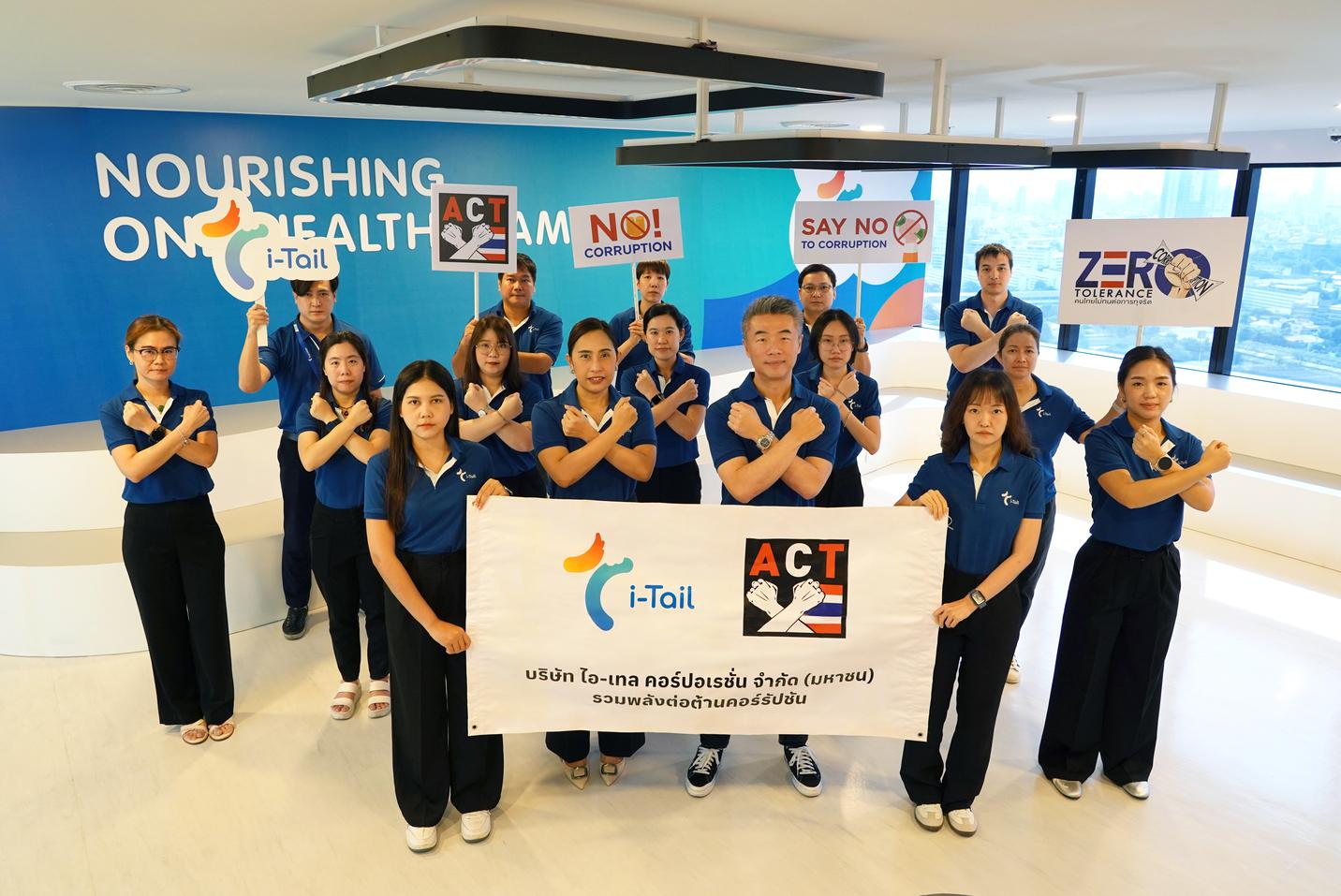
the Company participated in an online seminar for Thailand’s Anti-Corruption Day 2025 titled “No cheating no chance of success, really?” Organized by the Anti-Corruption Organization of Thailand.
Joined or Declared Intent to Join Anti-Corruption Networks
Yes
Networks & Projects Joined
| Network / Project | CAC Certified |
|---|---|
| Thai Private Sector Collective Action Against Corruption: CAC | Y |
| United Nations Global Compact (UNGC) | |
| Participation of anti-Corruption networks and initiatives |
Material Changes & Developments in CG
Reviewed the CG Policy or Board Charter in the Past Year
Yes
Material Changes or Developments in the Past Year
Yes
Policy Review — Description
The Board of Directors recognizes the importance of good corporate governance in sustaining the growth of the Company's operations and enhancing acceptance in both domestic and international markets. Therefore, the Board of Directors is committed to adhering to good corporate governance principles, including ensuring that directors and executives possess leadership, vision, and accountability. Furthermore, the Company’s management structure is designed to provide effective supervision, monitoring, and appropriate checks and balances. The key objectives are as follows:
To achieve management that is fair, ethical, and transparent, while ensuring the equitable treatment of shareholders and stakeholders.
To enhance business competitiveness and build confidence among shareholders, investors, and all stakeholders.
To ensure operational efficiency, stability, and sustainable business growth, thereby enhancing long-term shareholder value.
In 2025, the Board of Directors reviewed and approved material revisions to policies and practices relating to good corporate governance as follows:
Reviewed the Corporate Governance Policy to ensure that the Company’s governance practice remains current and aligned with the Corporate Governance Code for listed companies 2017 (CG Code). Directors, executives, and employees are required to comply with this policy
Reviewed and revised the Ethics and Code of Conduct to ensure appropriate ethical business practices and proper implementation throughout the organization
Reviewed and approved revisions to the Charter of the Executive and Sustainability Development Committee to align with updated operational practices
Reviewed the Company’s business strategies, future business targets, and sustainability targets, while regularly monitoring management performance
Reviewed and approved revisions to the Delegation of Authority to ensure appropriateness and consistency with current business operations, including additional clarification of authority and responsibilities
Implements the CG Code for Listed Companies
No
CG Code — Description
The Company has adopted the principles of good corporate governance for listed companies under the Corporate Governance Code for Listed Companies (CG Code 2017) issued by the Securities and Exchange Commission, by applying such principles in accordance with the nature, size, and business context of the Company.
In 2025, for matters that the Company has not yet implemented, and appropriate alternative measures have been recorded as part of the resolution by the Board of Directors for annual review. The alternative measures are as follows
CG Code | Explanation |
The Chairman of the Board should be an independent director. | As of December 31, 2025, the Chairperson of the Board is Mr. Thiraphong Chansiri, who is not classified as an independent director. However, the Board of Directors appointed the Chairperson of the Board based on knowledge, abilities, and a profound understanding of the pet food business. He has served as a director of the Company for over 25 years and possesses significant experience and expertise in various businesses. This expertise is instrumental in shaping the Company's strategic planning and operations, leading to decisions that serve the best interests of the Company and its shareholders. In addition, he has encouraged all directors to cultivate an ethical corporate culture and contribute to good corporate governance. This effort aimed to strengthen the relationship between executive and non-executive directors, as well as between the Board of Directors and the Company’s management. To promote the balance between the Board of Directors and the management under the principles of good corporate governance for listed companies. The Board of Directors has appointed an independent director, Prof. Emeritus. Teerachai Chantarojanasiri, as Lead Independent Director to participate in determining the agenda for the Board’s meetings. |
Other CG Performance & Outcomes
In recognition of its commitment to good corporate governance, the Company received an “Excellent” (5-Star) rating in the Corporate Governance Report of Thai Listed Companies 2025 (CGR 2025), conducted by the Thai Institute of Directors (IOD), based on an assessment of 844 listed companies.
In addition, the Company’s 2025 Annual General Meeting of Shareholders received an “Excellent” (4 Medals) rating under the AGM Checklist. The Company was also selected for inclusion in the 2025 ASEAN CG Scorecard as a Thai-listed company recognized in the ASEAN Asset Class and received the ASEAN Corporate Governance Scorecard Virtual Awards, reflecting the Company's continued commitment to strengthening good corporate governance practices.